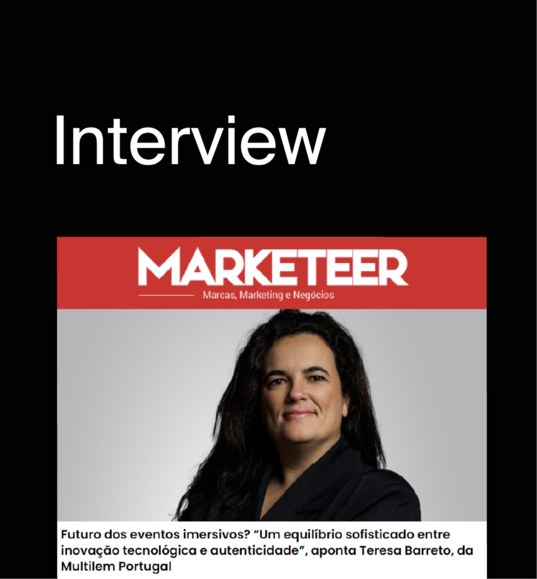
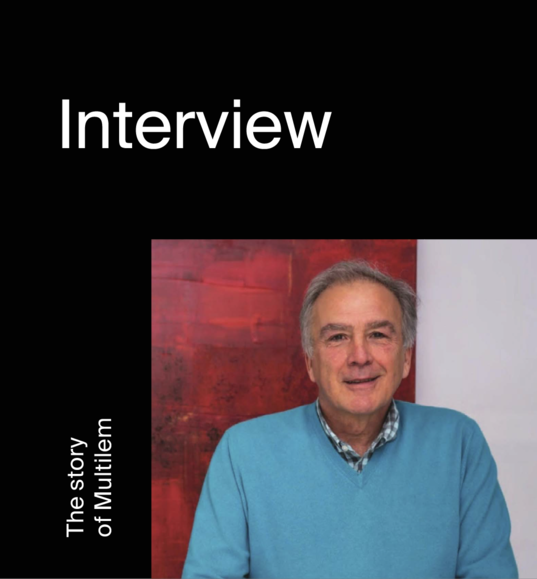
The Future of Immersive Events? A sophisticated balance between technological innovation and authenticity, says Teresa Barreto from Multilem Portugal.
Multilem, a Portuguese company specializing in brand experiences, has strengthened its international presence with the design and production of SOS OCEAN, an immersive event held in Paris on March 30–31, 2025.
As part of its global expansion and innovation strategy, the project combined design, technology, and sustainability to deliver a powerful call to protect the oceans, preceding the Third United Nations Ocean Conference (UNOC).
Multilem was the partner for the Oceano Azul Foundation, supporting an event that also marks a milestone in how the company combines purpose with environmental impact.
In an interview with Marketeer, Teresa Salvação Barreto, Commercial Director of Multilem Portugal, shares the project’s behind-the-scenes, the company’s vision for the future of sustainable events, and the role of creativity as a driver of change.
Marketeer (Mkt): How does SOS OCEAN fit into your strategy of expansion and innovation?
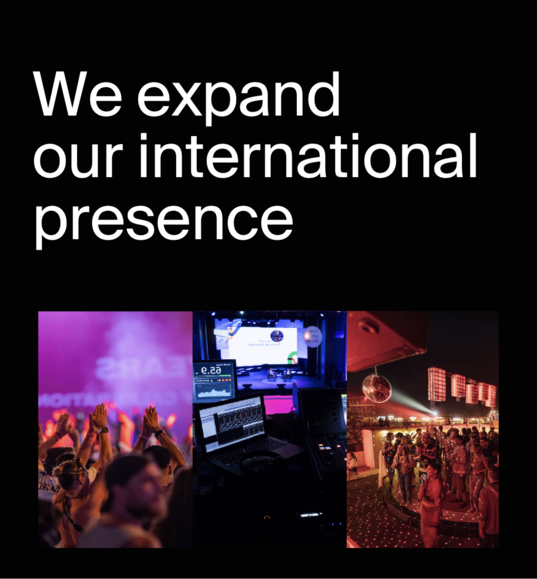
Teresa Salvação Barreto (TSB): SOS OCEAN is a natural extension of our expansion and innovation strategy. Over the past few years, Multilem has strengthened its international presence and can now deliver the same level of quality and confidence in both national and international projects. We’re ready to operate wherever our clients need us, with the same responsiveness we’d offer right next door. That’s our commitment and a major advantage of working with our team.
Mkt: Design and technology are key elements in your projects. How were they applied in developing this immersive event?
TSB: Initially, we explored bold ideas like street activations, physical art installations, virtual reality, and scenographic elements within the event spaces. However, these more daring technological approaches, uggested and developed by our creative team, were ultimately removed when our client [Oceano Azul Foundation] felt they might overshadow the event’s core purpose.
Once we refocused on conveying a sense of urgency to the decision-makers present in the room, we worked scenographically to ensure the message resonated in every detail: the positioning of the “SOS OCEAN” installation with the Eiffel Tower in the background, the recreation of the ocean floor on the ceiling of the dining and debate hall at the Musée de l’Homme, and the transformation of the foyer at the National Maritime Museum, painted blue and covered with slogans that appeared to rise and fall like tides.
Mkt: What were the biggest challenges in designing and producing SOS OCEAN? Any particularly memorable moments?
TSB: The biggest challenge was having a clear understanding of each speaker’s specific technical needs for the debate and the conference. We like to prepare and test everything in advance, but in this case, we arrived in Paris with several key elements still undefined.
Also, working in museums added another layer of complexity: all installations and tests had to be done at night or in the early hours before the event, leaving little or no room for adjustments. Everything had to go right the first time—and thankfully, we were well-prepared.
Mkt: SOS OCEAN precedes the Third United Nations Ocean Conference (UNOC). How do you hope this event contributes to the global conversation on ocean protection?
TSB: The main goal was to bring together, in advance, a select group of leaders, policymakers, scientists, and environmental influencers from around the world to address the ocean’s most pressing challenges. The mission was to help shape strategies, raise the alarm, and catalyze action toward the transformative commitments that must be secured at UNOC3.
Mkt: What was the audience experience like at the event?
TSB: Unlike UNOC conferences, which are broader and open to the public, SOS OCEAN was entirely targeted at government and scientific leaders. The experience was therefore more intimate and focused, fostering deep dialogue and idea exchange among key decision-makers to drive collaborative and concrete action for ocean protection.
Mkt: Sustainability and environmental awareness are increasingly present in events. How does Multilem integrate these values into its projects?
TSB: At Multilem, sustainability is a top priority. In SOS OCEAN, this was clearly reflected. We developed the plan using local suppliers to reduce transportation and support the local economy. We stuck to that plan for the most part, only activating in-house production for the scenography once we realized the extremely tight and overnight installation schedule. Given the challenge, we brought in our internal team to ensure a safe and efficient execution.
Additionally, we minimized environmental impact by reusing materials whenever possible and exploring digital alternatives. Every detail—from the Eiffel Tower installation to the museum scenography—was designed with sustainability in mind, merging design, technology, and environmental responsibility.
Mkt: What trends do you foresee for the future of immersive events and brand experiences?
TSB: The future of immersive events points to a sophisticated balance between technological innovation and authenticity. The key will be to awe the audience and create experiences that connect, surprise, and delight. Innovation will be essential for delivering that “wow” factor. Artificial intelligence and immersive technologies will continue to enhance personalization and interactivity, creating deeper emotional impact. Real-time, tailored experiences are becoming essential—and Multilem is already exploring this through exclusive solutions.
Moreover, sustainability is no longer a trend—it’s a duty. Multilem adopts responsible practices like reusing structures and applying circular economy principles, addressing the growing demand for events with a positive planetary impact. Finally, brand experiences are evolving into collaborative storytelling, where the audience becomes the protagonist—co-creating authentic and lasting memories.